Trenchless Pipe Lining in Canton, MA
By Canton 24/7 Plumbing, 2026
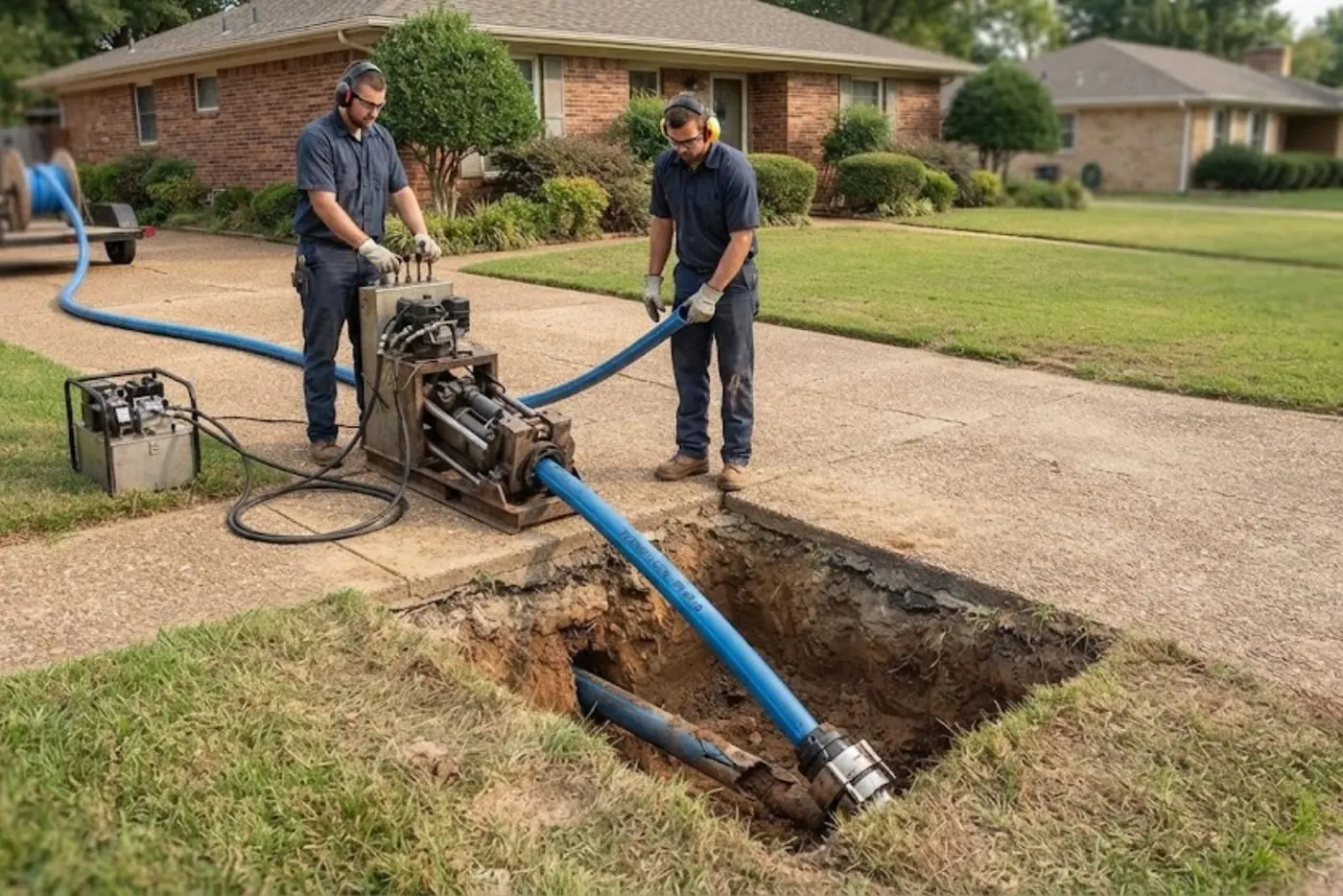
Trenchless pipe lining repairs a damaged sewer line from the inside. A resin-soaked liner is pulled or inverted into the old pipe, then cured until it hardens into a new pipe within the old one. Done right, it avoids digging up the lawn, driveway or foundation slab.
It is not a cure for every sewer problem. For a Canton, MA homeowner with roots, cracks or leaking joints, lining can be a smart repair. For a collapsed, offset or bellied pipe, it is the wrong tool, and a camera inspection is the only honest way to find out which you have.
What the liner actually is
The most common method is cured-in-place pipe, often shortened to CIPP. A felt tube is saturated with epoxy resin, fed into the old pipe through a cleanout or an excavated access point, and pressed against the wall with air or water pressure. Heat, steam or ultraviolet light then cures the resin.
The result is a smooth, jointless inner pipe, slightly smaller in diameter than the old one but often with better flow because the interior is smoother. Roots lose their entry points because the joints are sealed behind the liner.
A short repair patch, called a spot liner or sectional liner, does the same job for one cracked joint instead of the full run. Which one fits depends on how widespread the damage is.
When lining works and when it does not
The camera picture decides this, not a sales pitch. These are the conditions a plumber looks for.
Lining is usually a good fit
- Root intrusion at joints, cut out first
- Hairline cracks and open joints
- Pitting or scale inside an aged pipe
- Continuous, correctly sloped pipe with an open path
Lining is the wrong tool
- Collapsed section where the camera cannot pass
- Offset joints where one pipe edge sits higher than the next
- Belly (a sag holding standing water) that must be re-graded
- Heavily deformed or crushed pipe that cannot be re-rounded
How a lining job runs from start to finish
The sequence below is typical. Details vary with pipe length, material and access.
Camera the line first
A sewer camera on a push rod runs through the pipe and records what is there. The plumber notes length, bends, material, damage and where the lateral meets the main.
Clean the pipe wall
Roots are cut with a cable and root cutter head, and grease or scale is removed, often by hydro jetting. Resin will not bond to a dirty wall.
Pull or invert the liner
The saturated felt tube enters from a cleanout or a small access pit and is pressed to the pipe wall. A bladder or an inflated tube holds it there.
Cure the resin
Hot water, steam or UV light hardens the resin. Cure time depends on pipe length and temperature, so the line is out of service for hours, not minutes.
Reopen connections and re-camera
A robotic cutter reopens branch lines, and a final camera pass proves the liner is smooth and open. Ask for the recording.
Lining versus the other repair options
Each method suits different damage. This table is a starting point for the conversation with your plumber.
| Method | Best for | Main limit |
|---|---|---|
| Full-length CIPP liner | Cracks, joint leaks, roots, old rough pipe | Needs a clear path and reasonable pipe shape |
| Spot (sectional) liner | One cracked joint or short damage | Damage elsewhere stays untouched |
| Pipe bursting | Pipe too far gone to line, same path | Needs entry and exit pits and nearby utility locating |
| Open trench replacement | Collapse, offset, belly, change of route | Digging, landscaping and surface restoration |
| Cleaning only | Roots or grease in sound pipe | Does not fix a cracked or sagging pipe |
Questions to ask before approving a liner
Ask to see the camera recording of your pipe before the quote is finalized. A pipe that shows a clean wall with roots at a joint is a different job from one with a missing section. If a contractor will not show you the video, treat the recommendation with caution.
Ask how branch connections will be reopened, what happens at the cleanout, and whether the liner is rated for your pipe's size. Ask what is done if the camera cannot pass an obstruction. A good answer is that the plumber stops, reports it and recommends another method.
Ask about the permit, too. Sewer work can trigger a permit and inspection requirement, and the Canton Building Department is the place to confirm what your specific job requires.
Limits worth stating plainly
Lining reduces the pipe's inner diameter slightly, so a pipe that was marginal for flow can get worse. A liner also will not fix a belly, because the liner follows the sag and the water still pools in it. Offset joints can leave a lip that catches paper, and a liner may seal over that lip without removing it.
No plumber can promise how long any liner will last or that a pipe will never clog again. Warranty terms belong in writing from the installer. Homeowner insurance usually covers sudden damage, not gradual wear, and policy wording decides, so read yours or ask your agent before assuming a claim.
If sewage is coming up in a basement drain right now, stop using water and treat it as an emergency. Our sewer line repair team can clear the line first, and a sewer camera inspection then shows whether lining or digging is the real answer.
Cost factors, not numbers
Price rises with pipe length, depth, and the number of bends. It rises with pits needed for access, with roots or grease that must be removed first, and with how many branches have to be reopened. Lining that avoids a driveway or slab usually saves surface restoration cost.
Spot repairs cost less than full lengths, but a spot repair on a pipe that is failing everywhere is money spent twice. The real number comes from a call after the camera shows the pipe.
Canton, MA: the public sewer side and your side
Canton receives MWRA sewer service, and the town's 2023 letter says sewer relining is under way in high inflow and infiltration areas. That work is on the public side. It does not line your private lateral, and it does not mean your own pipe is sound.
In practice, ask the Canton Water/Sewer Division where public responsibility ends for your property before you pay for repairs. If a camera shows a problem at the main, the town needs to know, and you do not want to line your lateral against a failed connection.
Town relining is also a good reason to camera your lateral when street work is nearby. If a sewer main in your area is being relined, your connection will be reopened, and a before-and-after view of your lateral helps separate your pipe's condition from the town's.
Sources: MWRA customer community page (regional utility), Canton Water/Sewer Division 2023 community letter (town utility report)
Canton, MA questions on this topic
Will town sewer relining in Canton fix my own sewer line?
No. The 2023 town letter describes relining of the public sewer in high inflow and infiltration areas. Your lateral, the pipe from your house to the main, is a separate pipe. Ask the Canton Water/Sewer Division where the town's responsibility ends and have your own line inspected by camera.
How do I know if my pipe is too damaged for lining?
The camera shows it. A pipe the camera cannot pass, a joint with one edge higher than the other, or a sag holding water all point away from lining. Ask for the recording, and ask the plumber to mark the distance where each problem sits.
Does a liner stop tree roots for good?
It seals the joints roots usually enter through, which removes their way in. It cannot stop roots from pressing on the outside of the pipe, and any connection left unsealed can still admit them. Annual or periodic camera checks catch a problem early.
Can I stay in the house during lining?
Usually yes, but you cannot use water while the liner cures. Plan on no showers, laundry or flushing for the hours your plumber tells you. Ask about a portable toilet and when you can reconnect fixtures.
Do I need a permit for sewer pipe lining?
It depends on the job and what the work involves. Clearing a stoppage does not need one under the state plumbing rule, but lining is repair work on the pipe itself. Ask the Canton Building Department about your specific job before work starts.
Related services and nearby towns
Homeowners near Randolph can see how we serve Randolph, and Stoughton readers can find plumbing help in Stoughton. In both towns the same rule applies: a camera inspection comes before you pick a repair method.
Sources and standards
These are the primary sources this page relies on. Anything not listed here is general plumbing practice, and local rules should be confirmed with the town.
- Town of Canton Building Department, online permitting page (plumbing and gas permits)
- Canton Water/Sewer Division 2023 water quality letter, distributed through the MWRA community page
Plumbing problem in Canton right now?
Call the 24/7 line. You hear a clear price before work starts.
Call (617) 752-0573